Guide
Van sizes explained: Luton van size, SWB, MWB and LWB
A Luton van holds about 17 to 19 cubic metres and carries up to about 1,000kg, against about 3 cubic metres for Enterprise's small van, on Enterprise's size guide and vehicle pages. Man-and-van firms usually keep to vans of 3.5 tonnes or less, the limit for driving on a standard car licence.
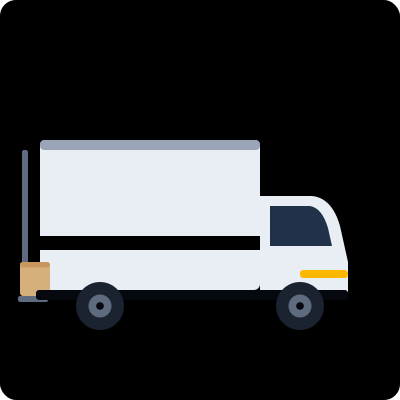
What sizes of van do man and van firms use?
Man and van firms mostly run five types of van: short wheelbase (SWB), medium wheelbase (MWB), long wheelbase (LWB), a Luton box van, and a Luton with a tail lift. The wheelbase names describe panel vans of increasing length, such as a Ford Transit Custom or a Mercedes Sprinter. A Luton is a separate box body built on a van chassis, with storage over the cab.
Hire firms often use their own labels instead. Enterprise calls them small, medium, large, extra large and Luton, so a firm's "large van" may be what another calls an LWB. Ask for the van's load volume in cubic metres rather than its name.
How much does each van size hold?
Enterprise's size guide gives 2.3 to 3.3 cubic metres for a small van, 5 to 6.5 for a medium van, up to 11.3 for a large van, up to 14 for an extra large van and up to 19 for a Luton. Its own landing page gives a Luton as 17.3 cubic metres, so expect 17 to 19 depending on the body.
Northgate Vehicle Hire's spec pages give real examples. Its SWB Peugeot Expert holds 5.3 cubic metres with a 2,512mm load length. Its MWB Mercedes Sprinter L2H2 holds 10.5 cubic metres with a 3,272mm load length. Its LWB Ford Transit L3H3 holds 12.4 cubic metres with a 3,494mm load length. Makers and hire firms name sizes differently, so some of these sit above the typical ranges this site uses: an SWB about 3 to 4 cubic metres, an MWB 5 to 7, an LWB 11 to 15 and a Luton 17 to 20.
Enterprise's Luton with tail lift measures about 4.0m long, 2.2m wide and 2.2m high inside, which is why a Luton takes wardrobes and sofas standing up.
How much weight can each van carry?
Payload is the weight of goods a van can legally carry. Northgate lists 1,182kg for its SWB Peugeot Expert, 1,162kg for its MWB Sprinter and 1,293kg to 1,361kg for its LWB Transit. Enterprise gives a large van about 1,500kg.
A Luton carries less weight despite holding more, because the box body is heavy. Enterprise lists 789kg to 1,000kg for a standard Luton and 800kg to 1,200kg for its Luton with tail lift. A house full of books, a piano or garden stone can reach the payload before the van looks full, so tell the firm about heavy items.
How many rooms fit in each van size?
Enterprise says a medium van suits a two-seater sofa or a small room, a large van a 1 bed flat or bedsit, an extra large van a 2 bed flat or small house, and a Luton the contents of a 2 to 3 bed flat or house. In medium boxes, it gives up to 13 for a small van, 26 for a medium van, 45 for a large van, 60 for an extra large van and 70 for a Luton.
Other guides are more cautious. AnyVan (20 May 2026) says a 3.5 tonne Luton with a tail lift suits 1 and 2 bed flats, and suggests more than one 3.5 tonne van for a 3 bed house. Bulky furniture fills a van faster than boxes, so a 3 bed home may mean two trips.
What is a Luton van with a tail lift for?
A tail lift is a powered platform at the back of a Luton that raises heavy items to floor height, so the crew does not carry them up a ramp. Enterprise gives its tail lift a capacity of up to 500kg.
It suits fridge freezers, washing machines, range cookers, large sofas and gym equipment. It does not raise the van's payload, so a heavy load still has to fit within the van's limit. If you have a ground floor with a long path or steps, ask whether the lift can reach level ground near the door.
Why does the 3.5 tonne limit matter?
The 3.5 tonne limit decides which licence the driver needs and which rules the firm runs under. GOV.UK says a category B car licence covers vehicles up to 3,500kg maximum authorised mass. Anything from 3,500kg to 7,500kg needs category C1.
Above 3.5 tonnes a firm also needs a goods vehicle operator licence, because GOV.UK requires one for vehicles with a gross plated weight over 3,500kg carrying goods for hire or reward. Drivers then fall under the assimilated drivers' hours rules and must use a tachograph, while vans under 3.5 tonnes follow GB domestic rules with a limit of 10 hours' driving a day.
This is why most man-and-van fleets stop at 3.5 tonne Lutons. A 7.5 tonne lorry holds more but brings a different licence, operator rules and usually a higher price.
Common questions
What size van do I need for a 1 bed flat?
Enterprise suggests a large van of about 11 cubic metres for a 1 bed flat or bedsit. A Luton of 17 to 19 cubic metres gives more room for bulky furniture.
Can I drive a Luton van on a car licence?
Yes, if it is within 3,500kg maximum authorised mass. GOV.UK says category B covers vehicles up to that weight, and Enterprise says its Luton can be driven on a standard licence.
How many boxes fit in a Luton van?
Enterprise gives up to 70 medium boxes for a Luton on its van hire page, and about 40 to 45 medium boxes with furniture for its Luton with tail lift.
Is a Luton bigger than an LWB van?
By volume, yes: up to 19 cubic metres against about 12.4 for Northgate's LWB Transit. By weight, often no, because a Luton's payload of about 1,000kg is lower than many LWB panel vans.